Conflict to Connection
God's Intent for Wholeness Through Conflict
Most people move toward conflict in fear, or avoid it completely. The Bible says that conflict can be used for accountability and growth.
Does any of this sound familiar?
- There's a conversation you've been meaning to have for months.
- Two people on your team stopped disagreeing out loud, and the whole team got quieter.
- You've noticed something that doesn't add up, and you have no idea how to bring it up without making it worse.
- A conflict got "resolved" and the relationship never came back.
- Your default is to raise your voice or leave the room, and you'd like a third option.
Most of us have two settings: fight or flee. Nobody handed us a third.
What happens in the course
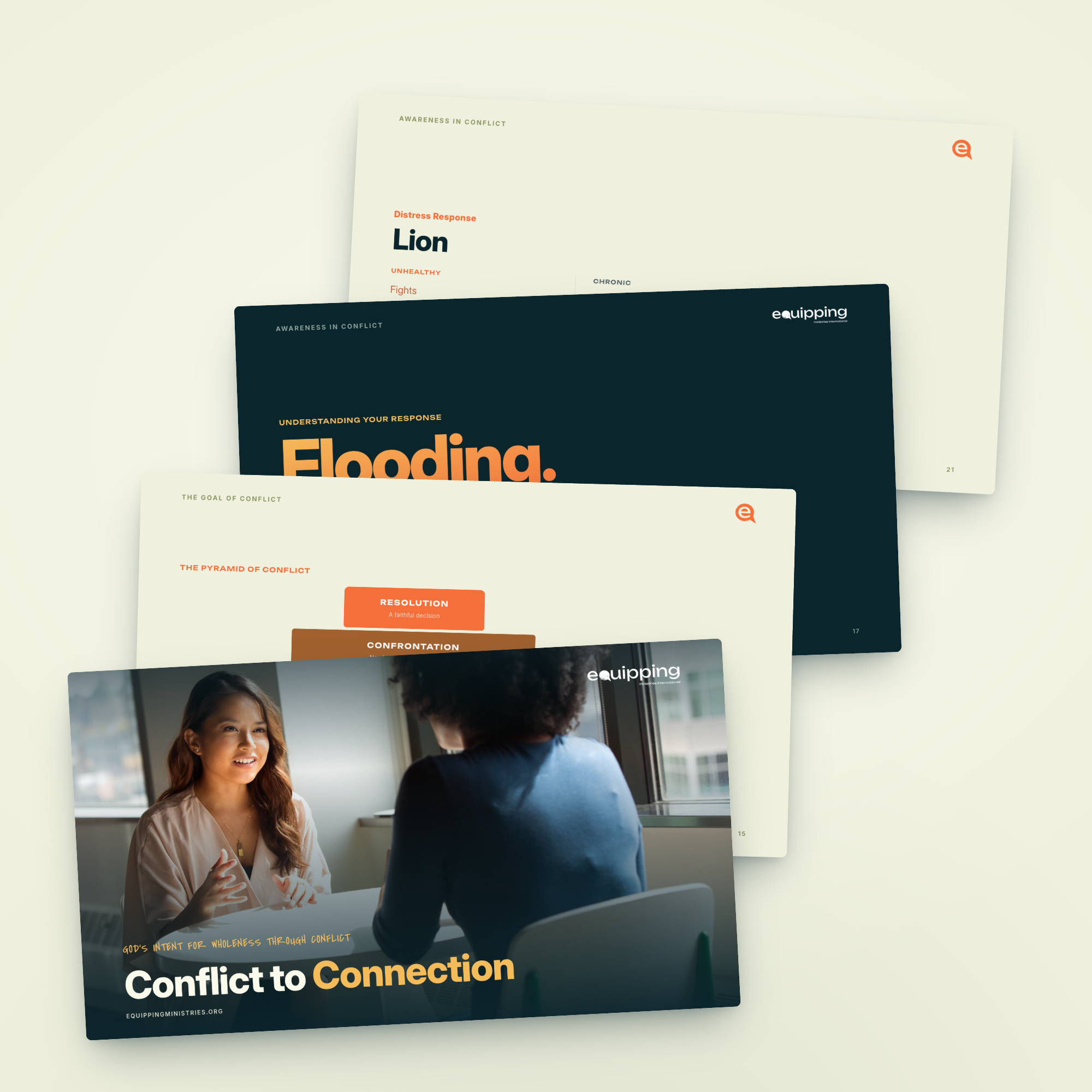
A third optionThe Pyramid of Conflict
The map your group leaves with. Four levels, each requiring the ones beneath it.
Resolution, which is a decision rather than a destination. It doesn't require the other person's cooperation. It requires your faithfulness and God's presence.
Confrontation, naming a discrepancy. Four elements: connection, a tentative opening, the specific observable gap, and an invitation. Naming something that doesn't add up, not delivering a verdict.
Collaboration, which means making clear requests. A request leaves room for a no. A demand takes that freedom away, which is why demands trigger defense.
Connection with God and each other. The foundation. Without it, everything above collapses into self-protection or a power play.
The higher up the pyramid, the higher the flooding risk. Which is why flooding gets taught before anyone practices the upper levels.
Flooding, and the four animals
When heart rate passes about 100 BPM, the thalamus pulls processing away from the prefrontal cortex and hands it to the survival response. Thinking stays impaired for up to 48 hours afterward. That's not a character flaw. It's biology, and it explains a lot of arguments.
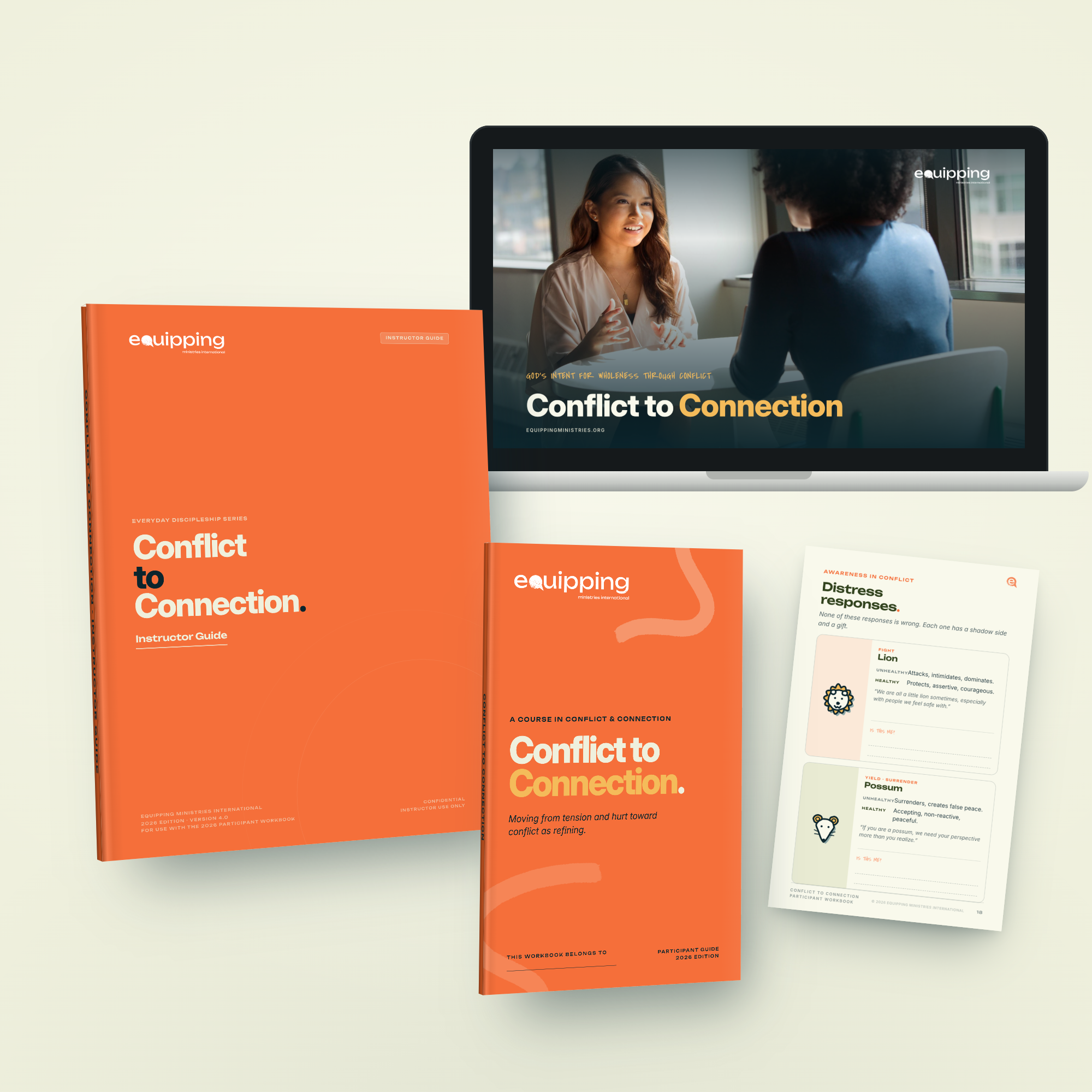
Your group finds their own pattern through four Distress Response Animals. Lion fights. Possum yields. Rabbit flees. Deer freezes.
Each has a healthy and an unhealthy expression: the Lion attacks or protects courageously, the Rabbit avoids forever or retreats wisely and comes back. Most people have a primary and a secondary.
What your group walks away doing
- Recognizing flooding in themselves before it takes over the conversation
- Naming what's actually driving conflict beneath the surface
- Making a request instead of a demand, using CHAT: clear, humble, actionable, timely
- Naming a discrepancy accurately using the four types
- Building a confrontation with all four elements instead of leading with the accusation
- Holding the vertical postures of grief, lament, and trust when the other person won't move
Why this course is different
Most conflict training leans on technique alone, or theology alone. This one brings both together, practiced with other people in a safe room, not just read about. The tools behind it have reached more than 800,000 people across 120+ countries.
Your group leaves with a process they can use in marriages, friendships, teams, and families, and a real shift in how they see conflict: not a threat, but an invitation toward wholeness.
Who it's for
Anyone who's thought, "There has to be a better way to do this." People wanting to lead with more emotional and spiritual maturity, and become someone who brings peace without avoiding the truth.
Two ways to run it
As a full day. Eight sections, roughly 8 hours of content.
As six sessions. What most churches choose, and what fits an existing small group rhythm.
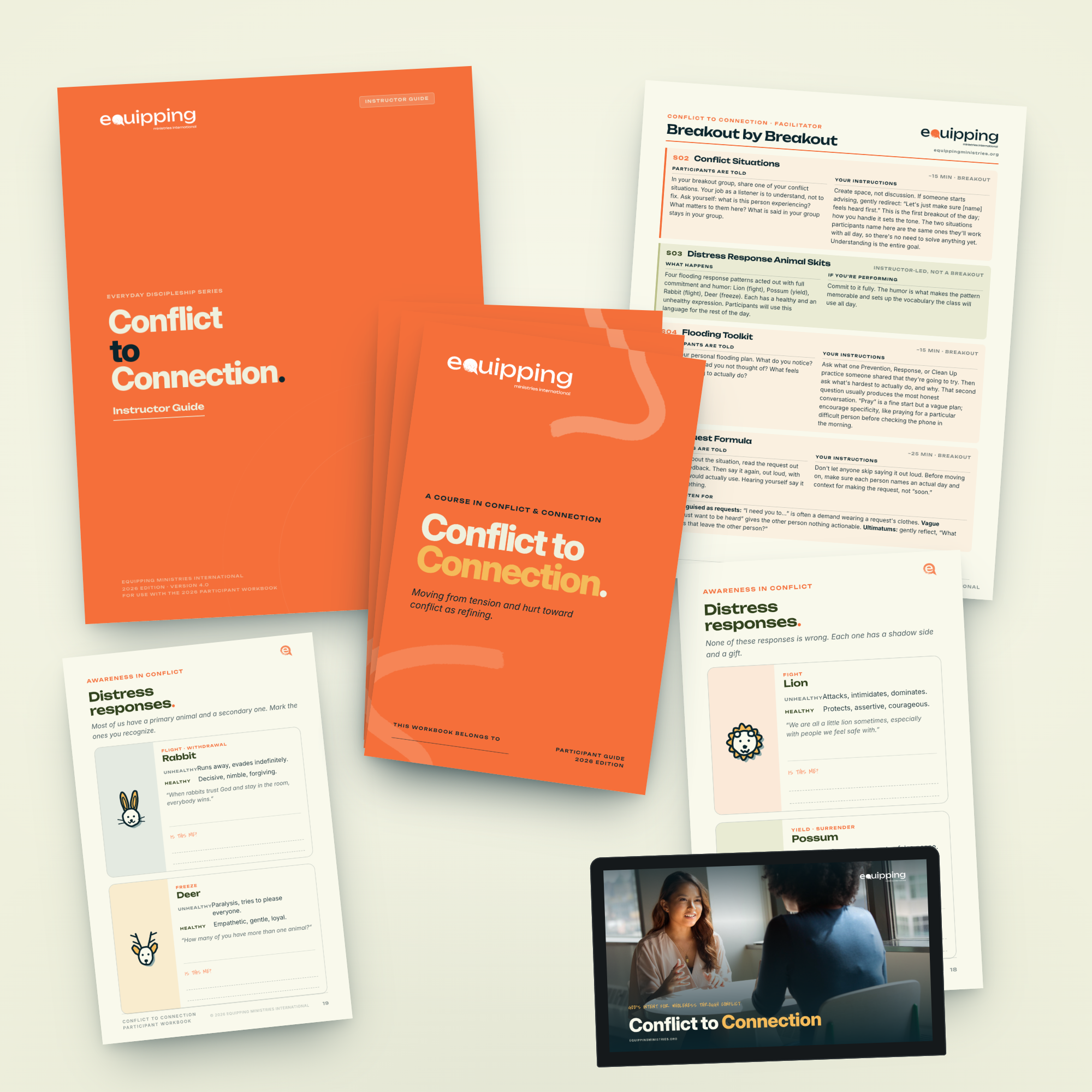
Your Course Kit
What's included
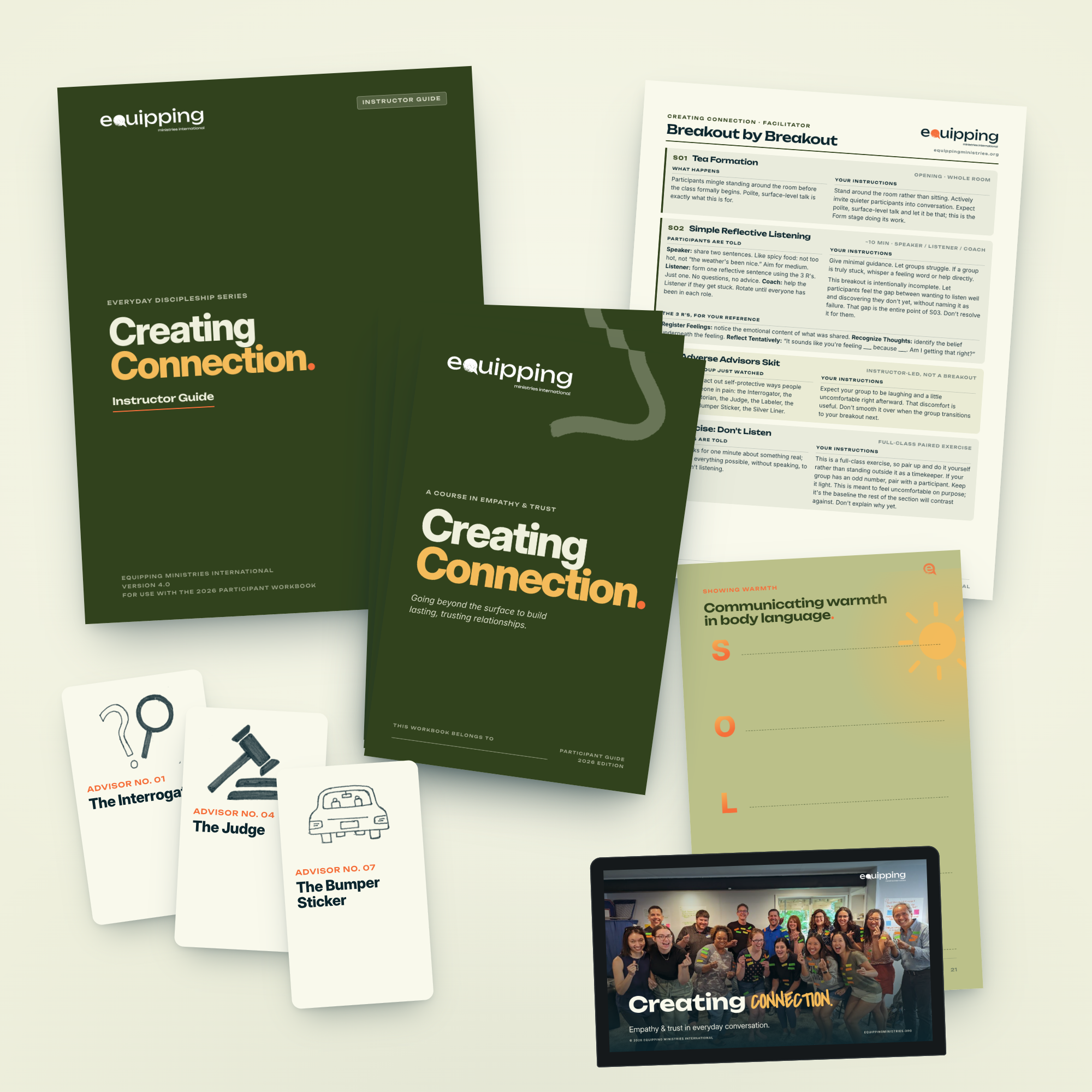
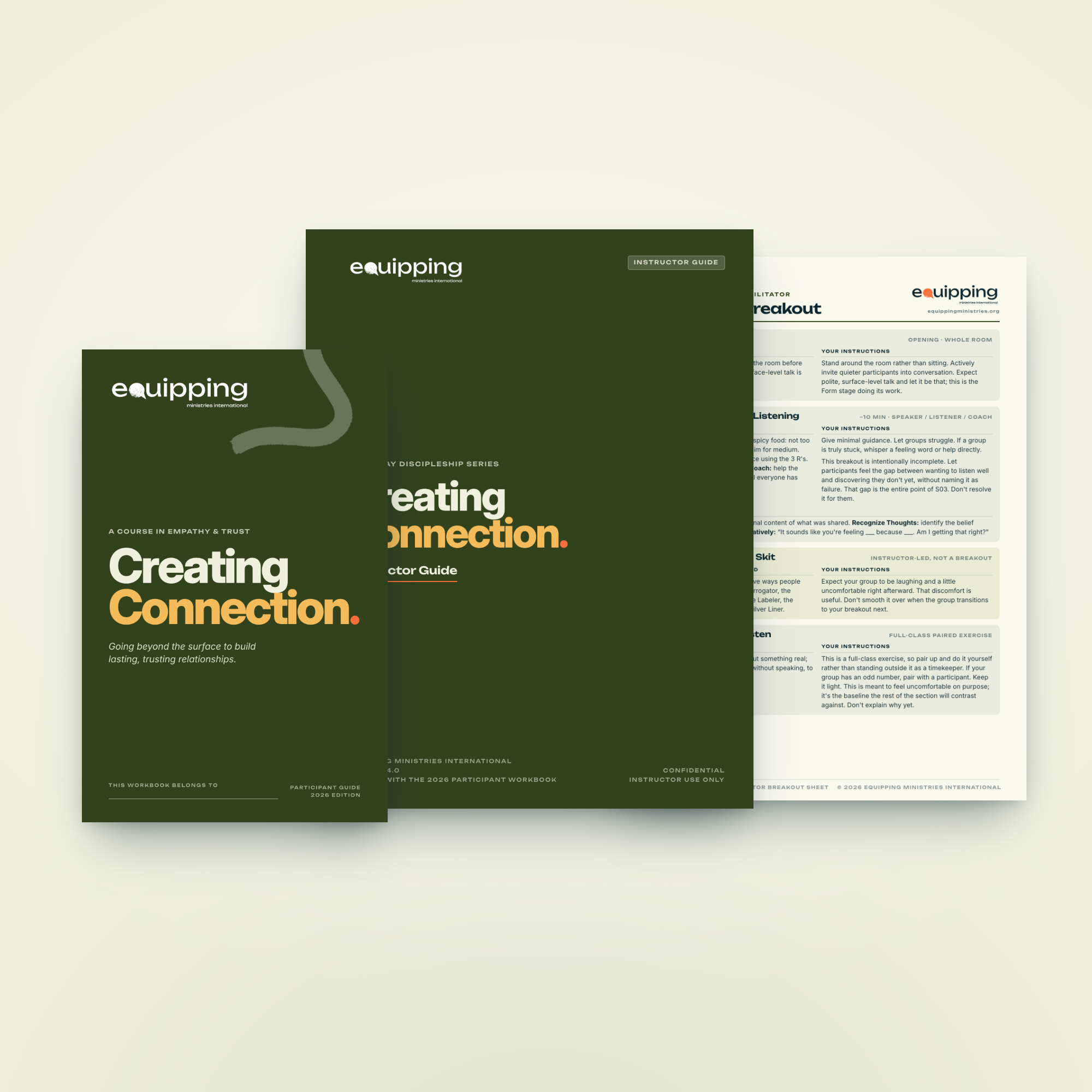
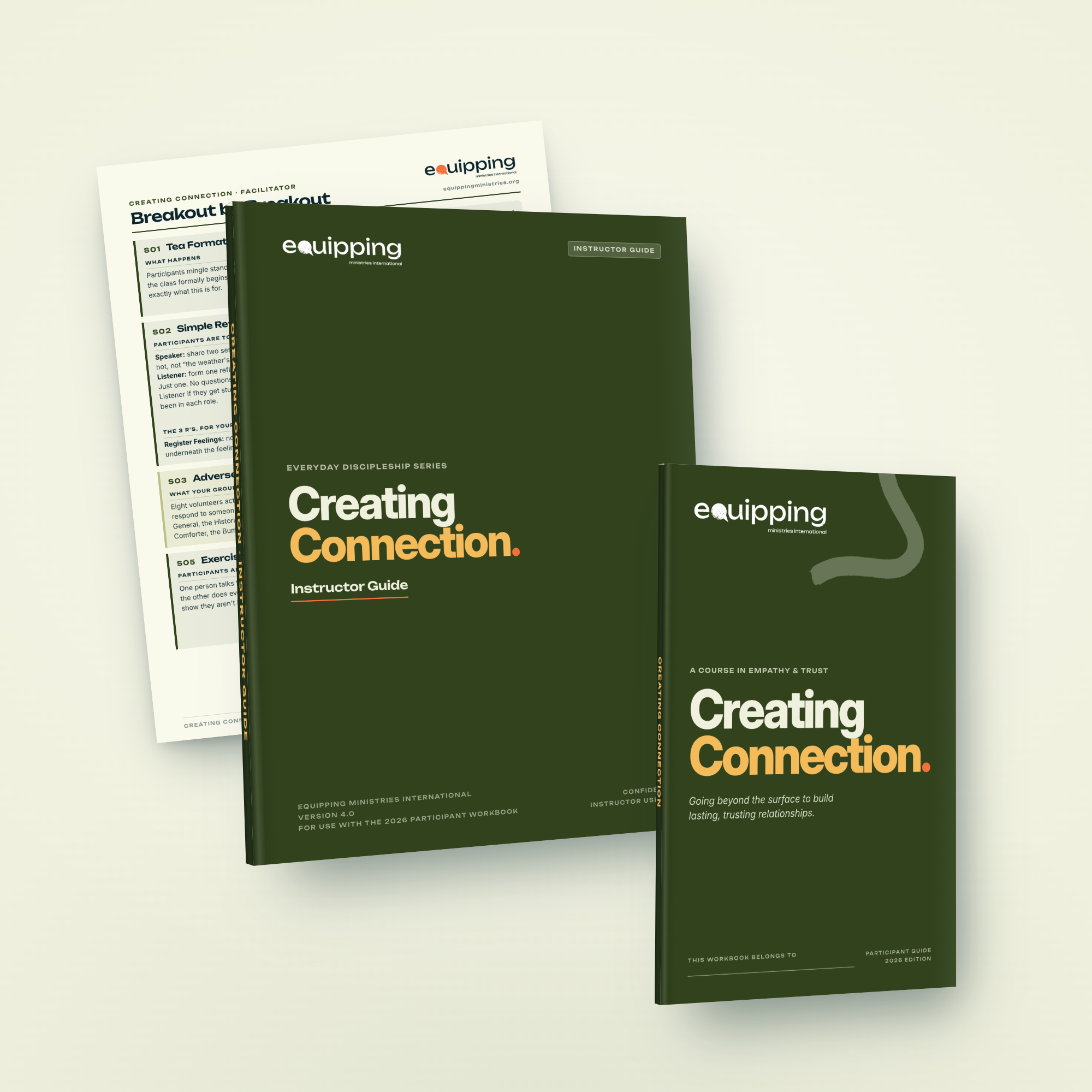
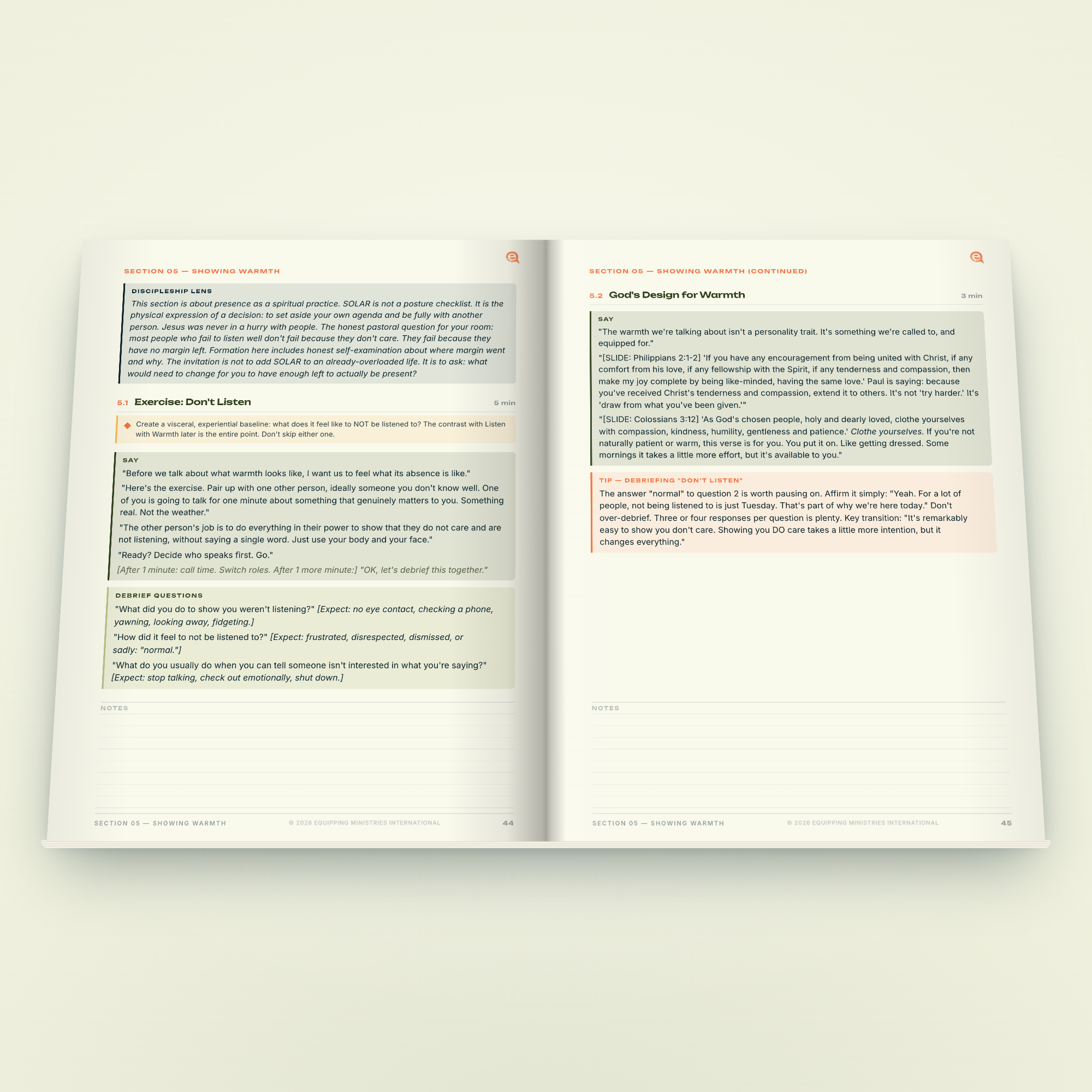
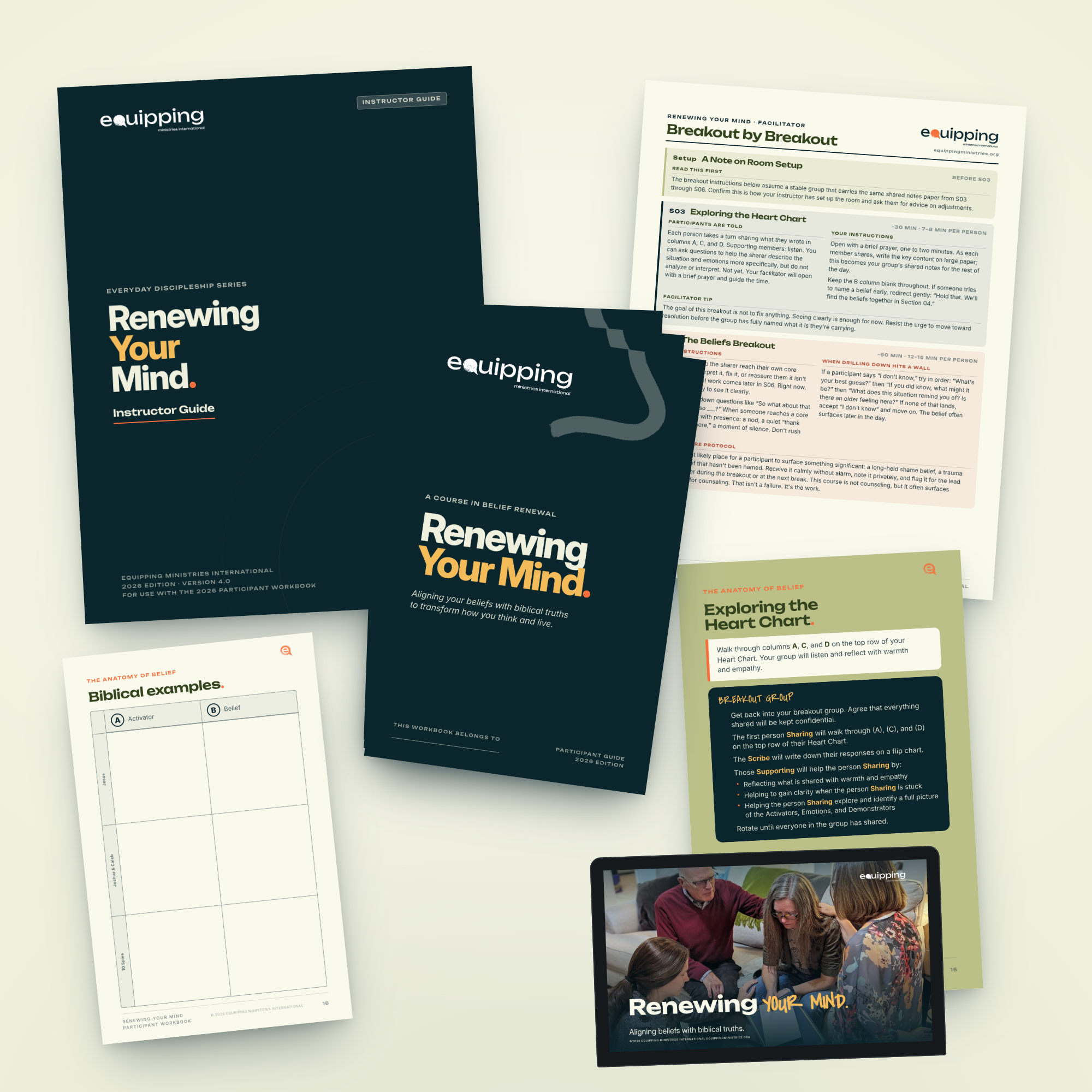
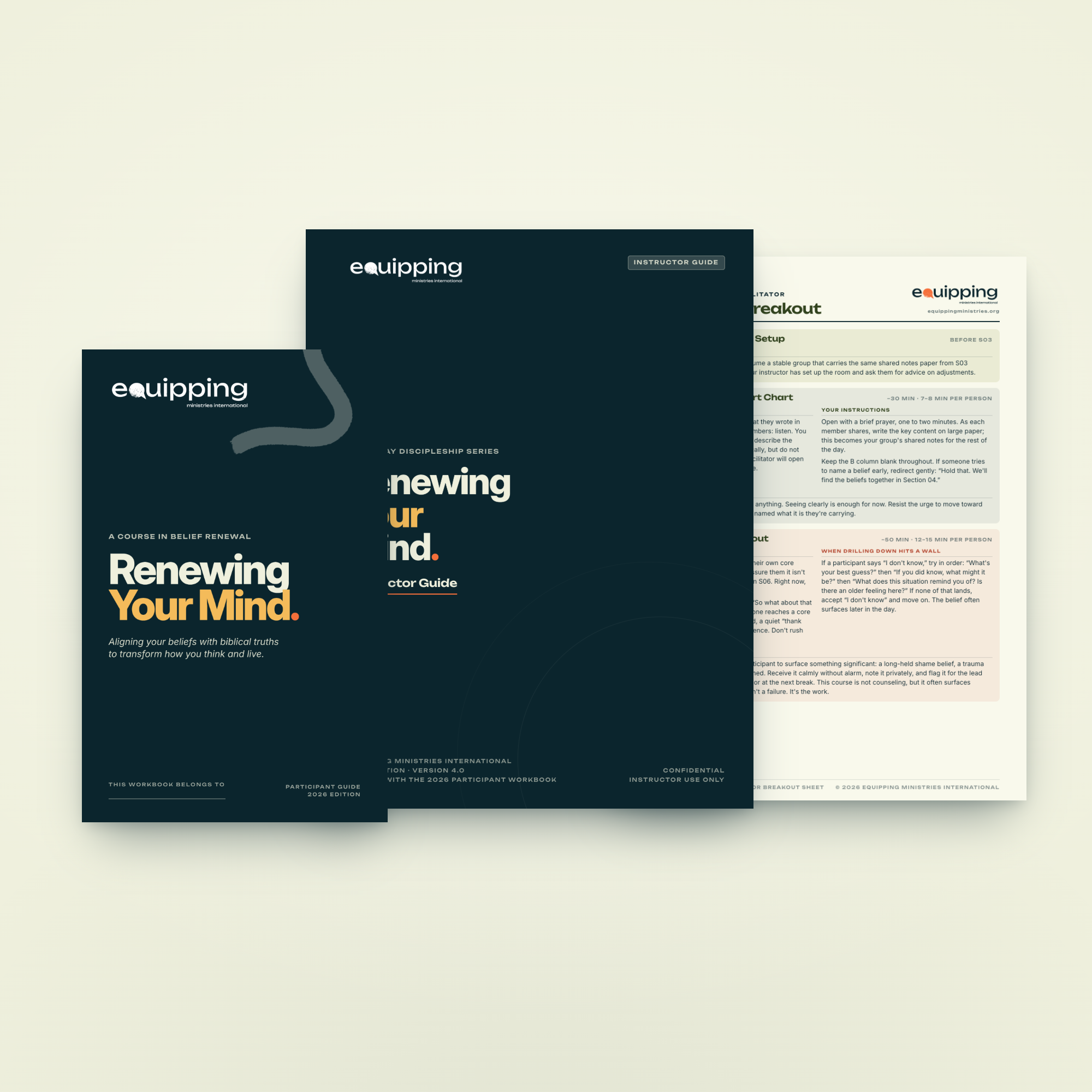
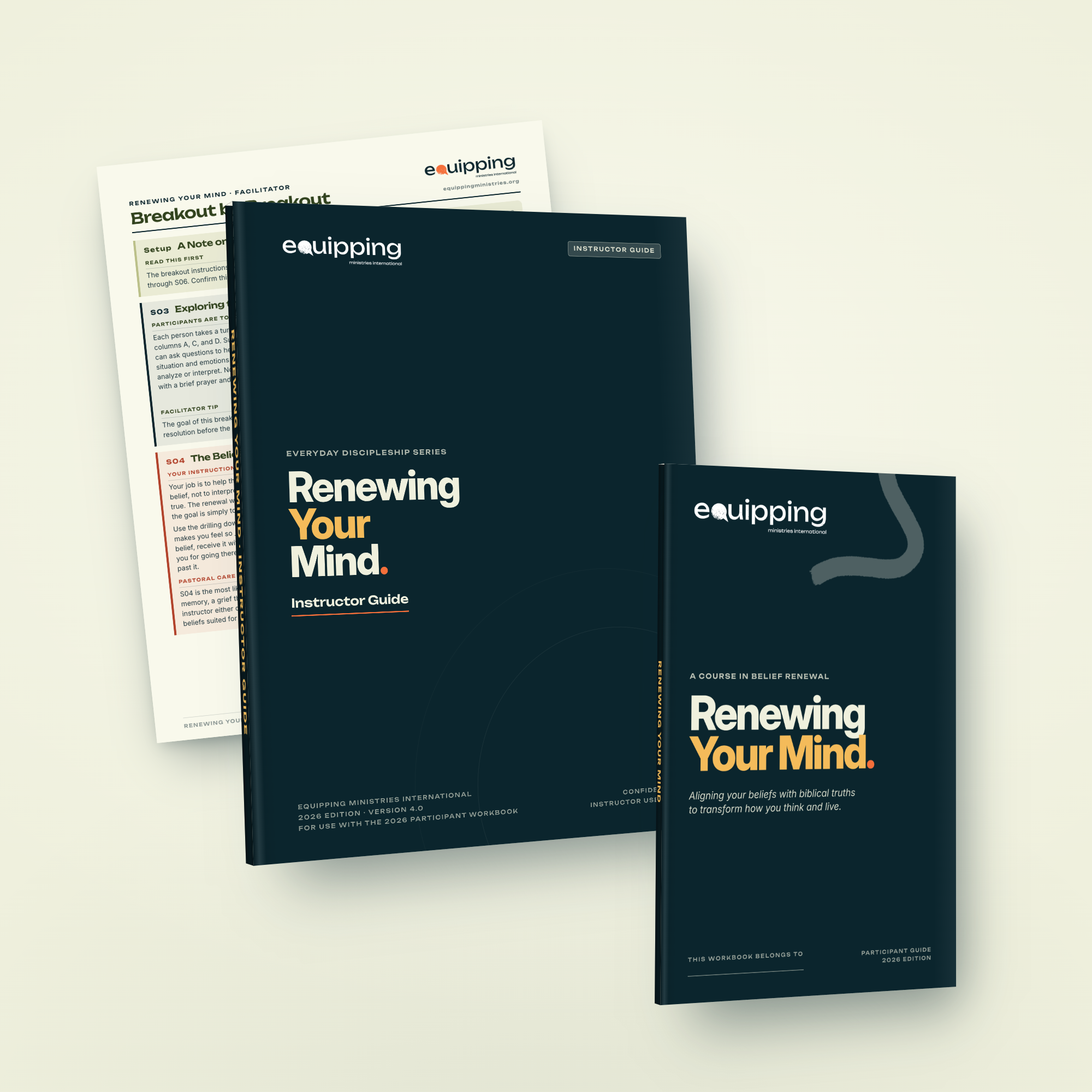
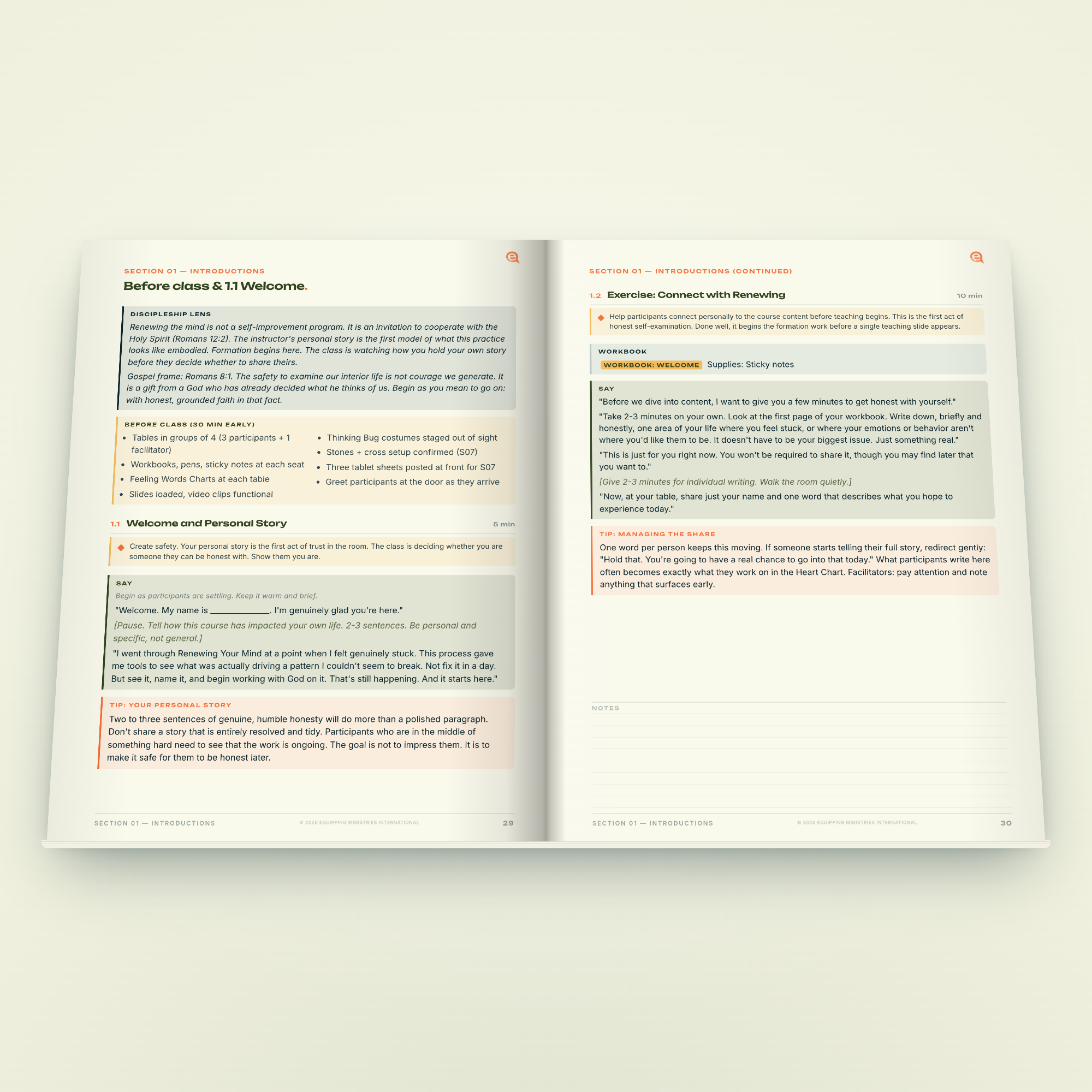
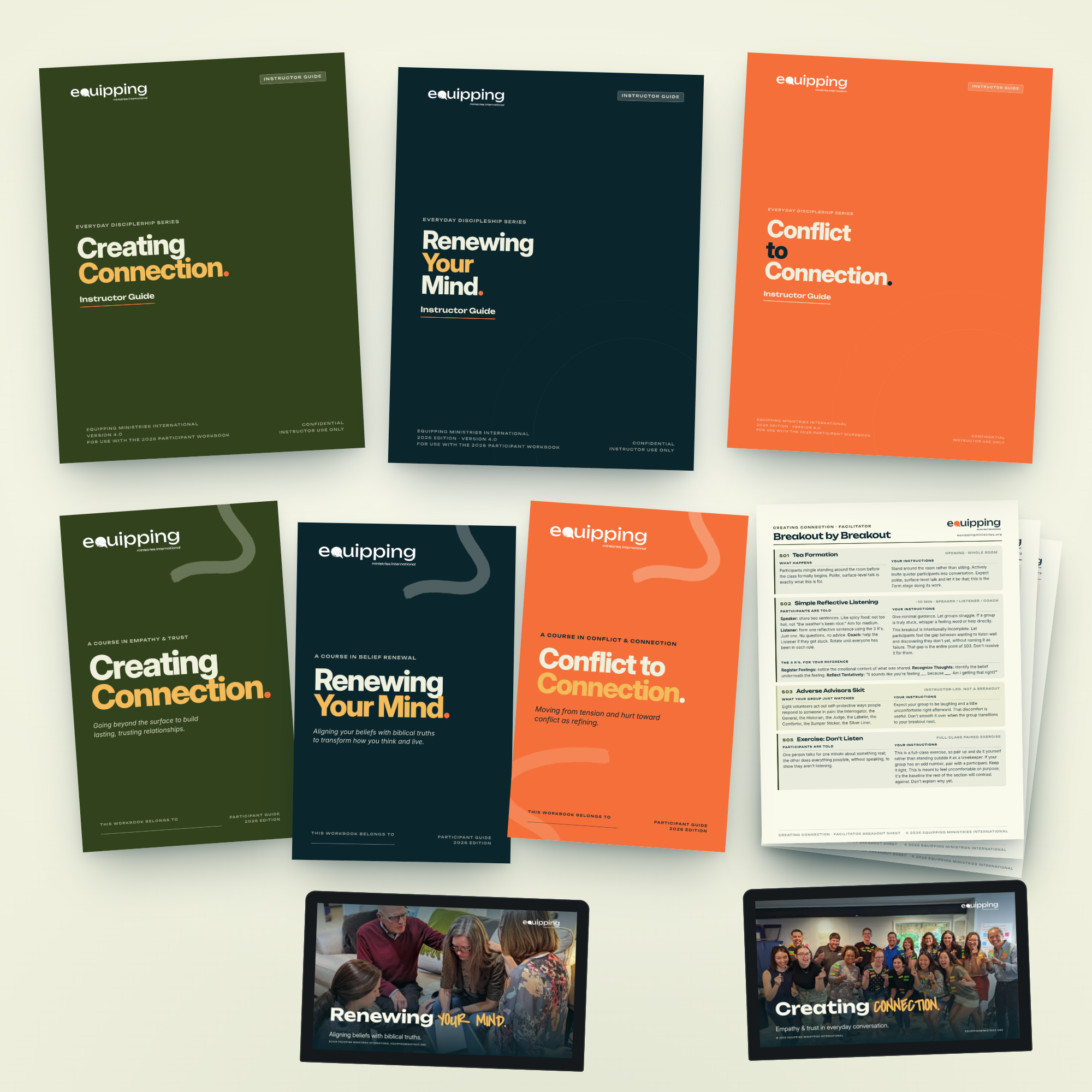
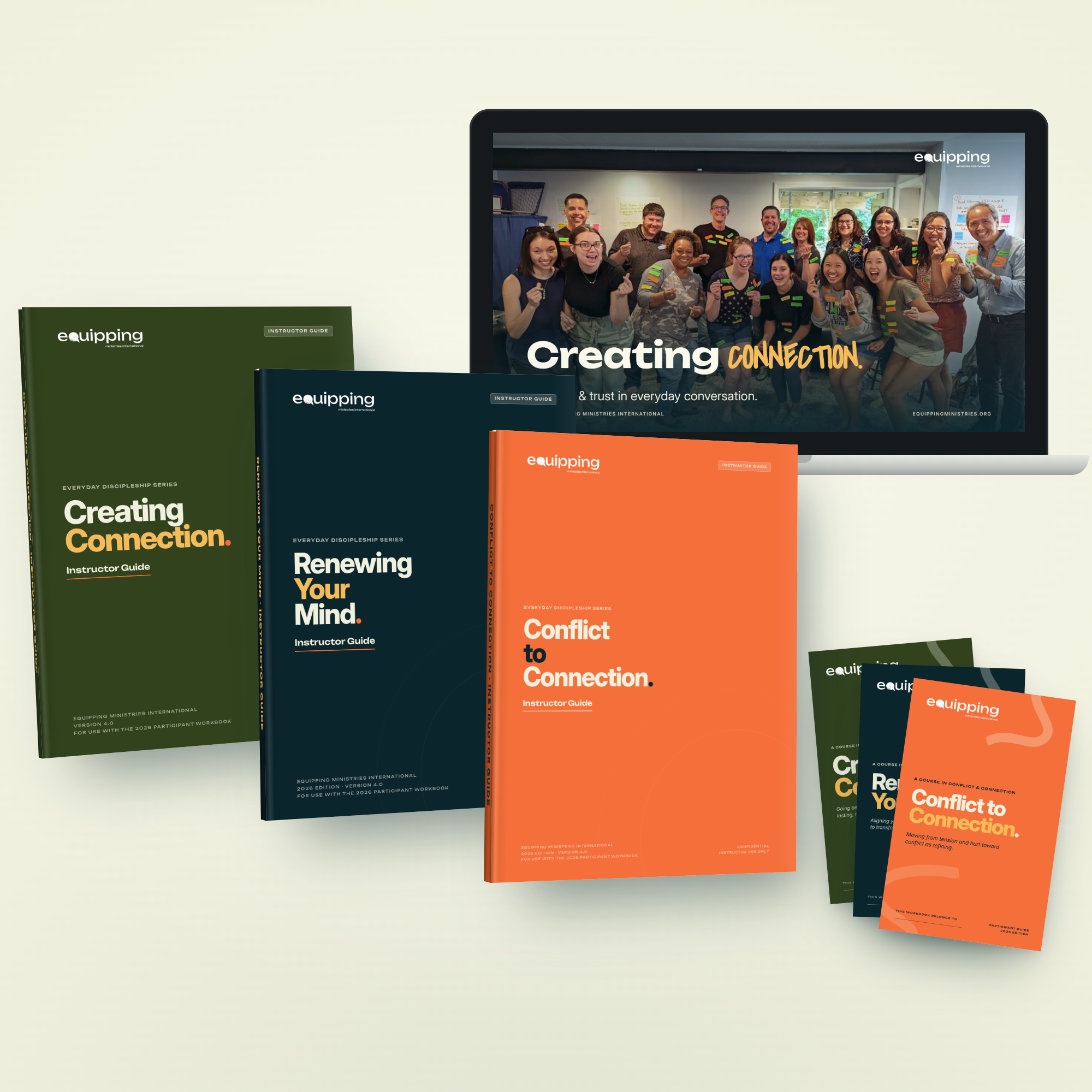
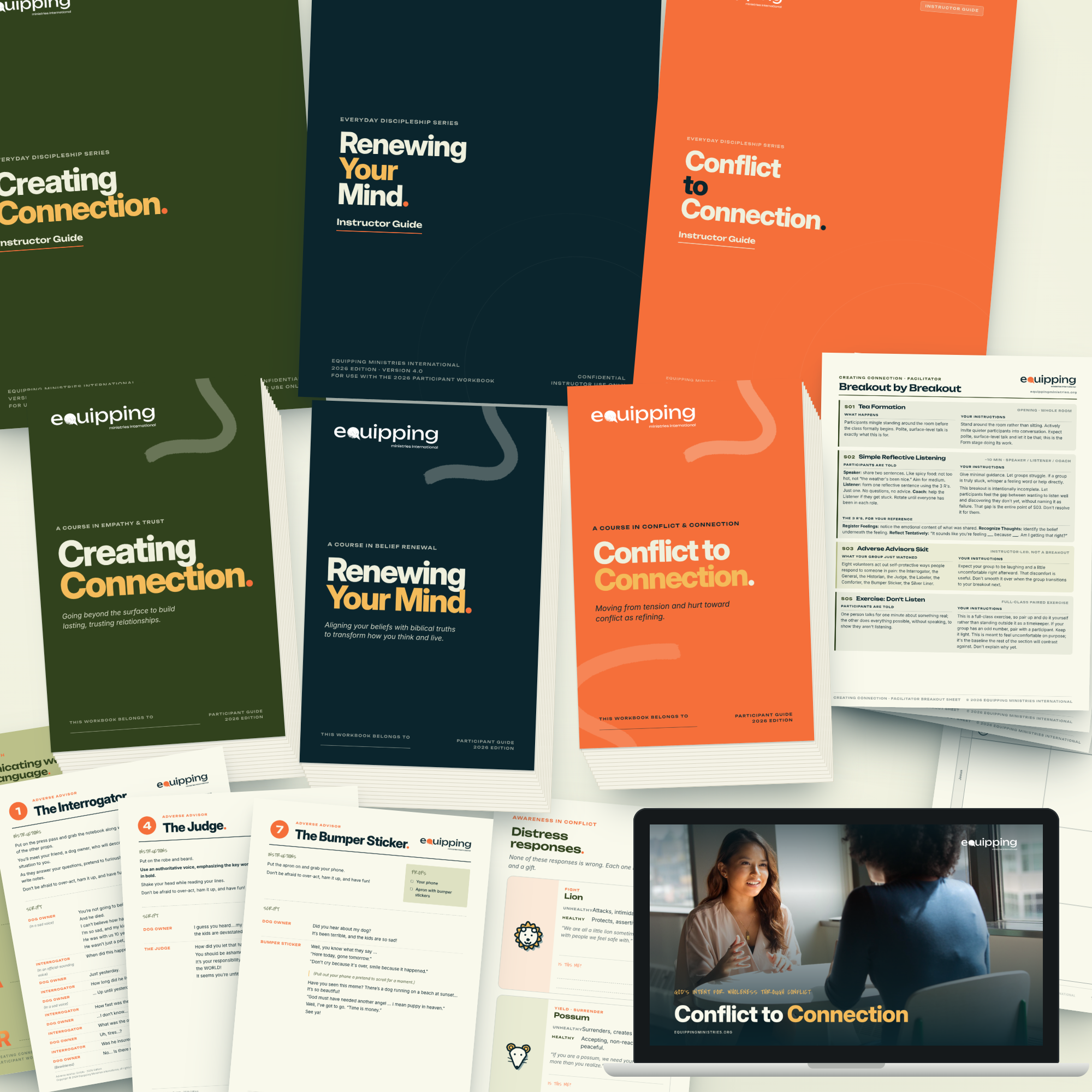
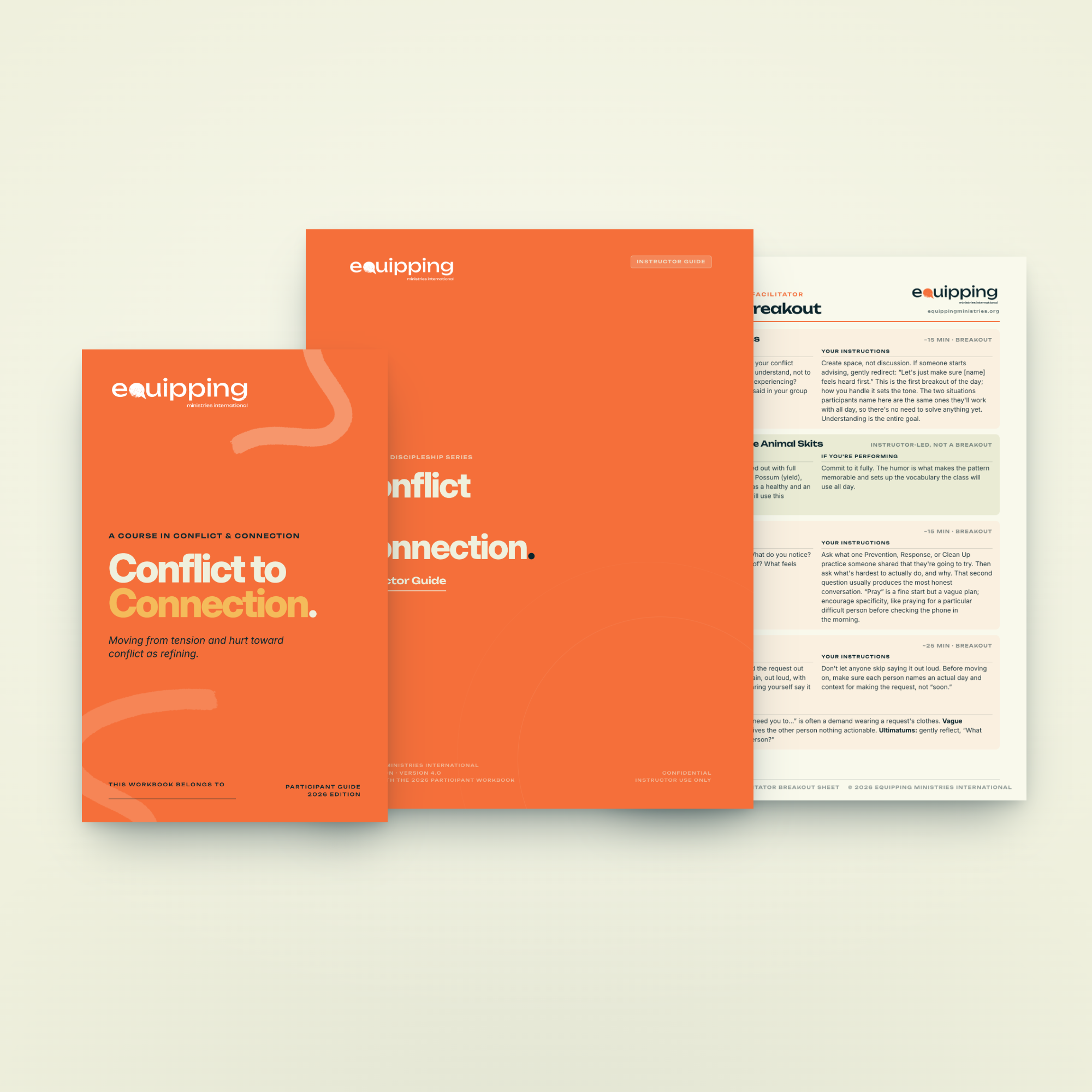
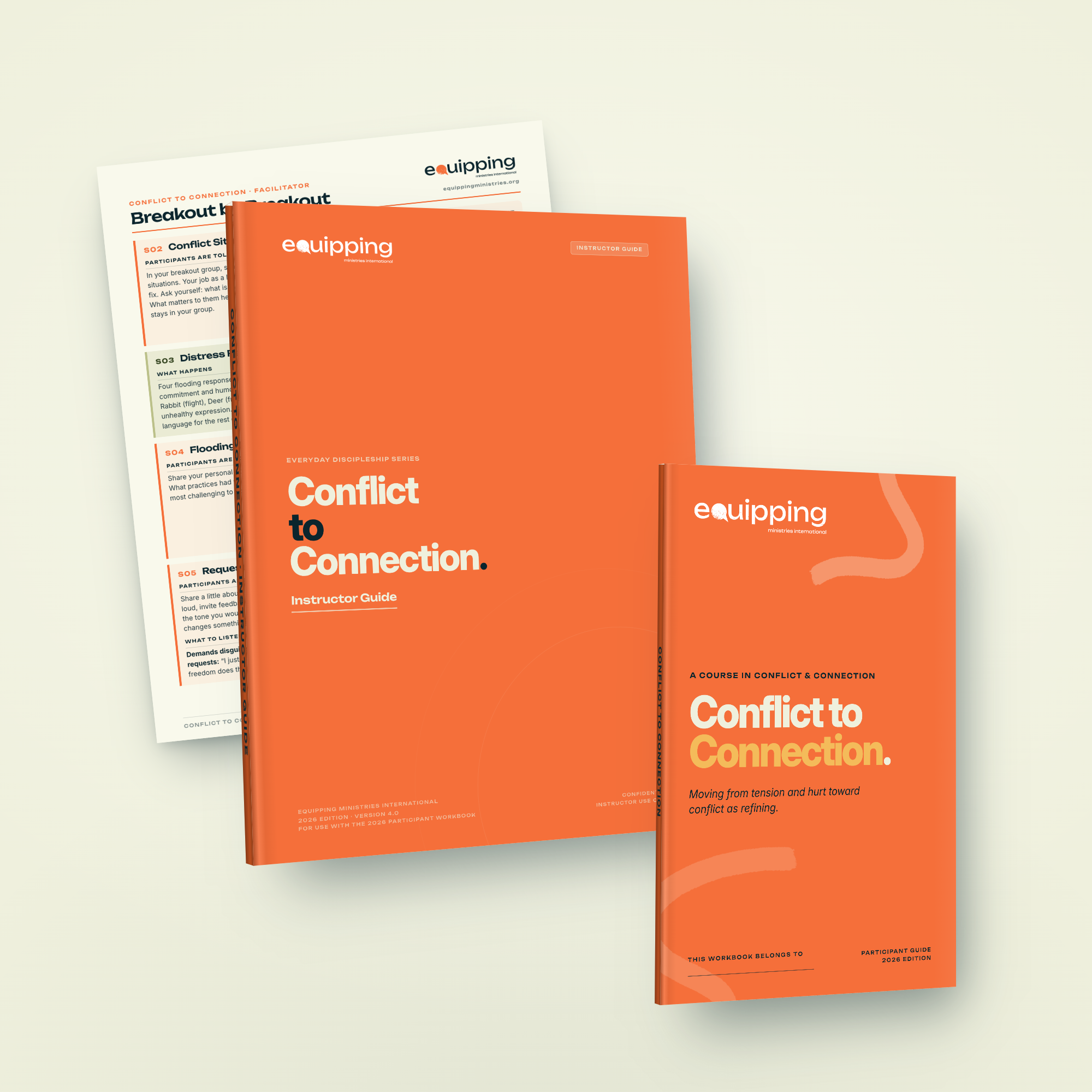
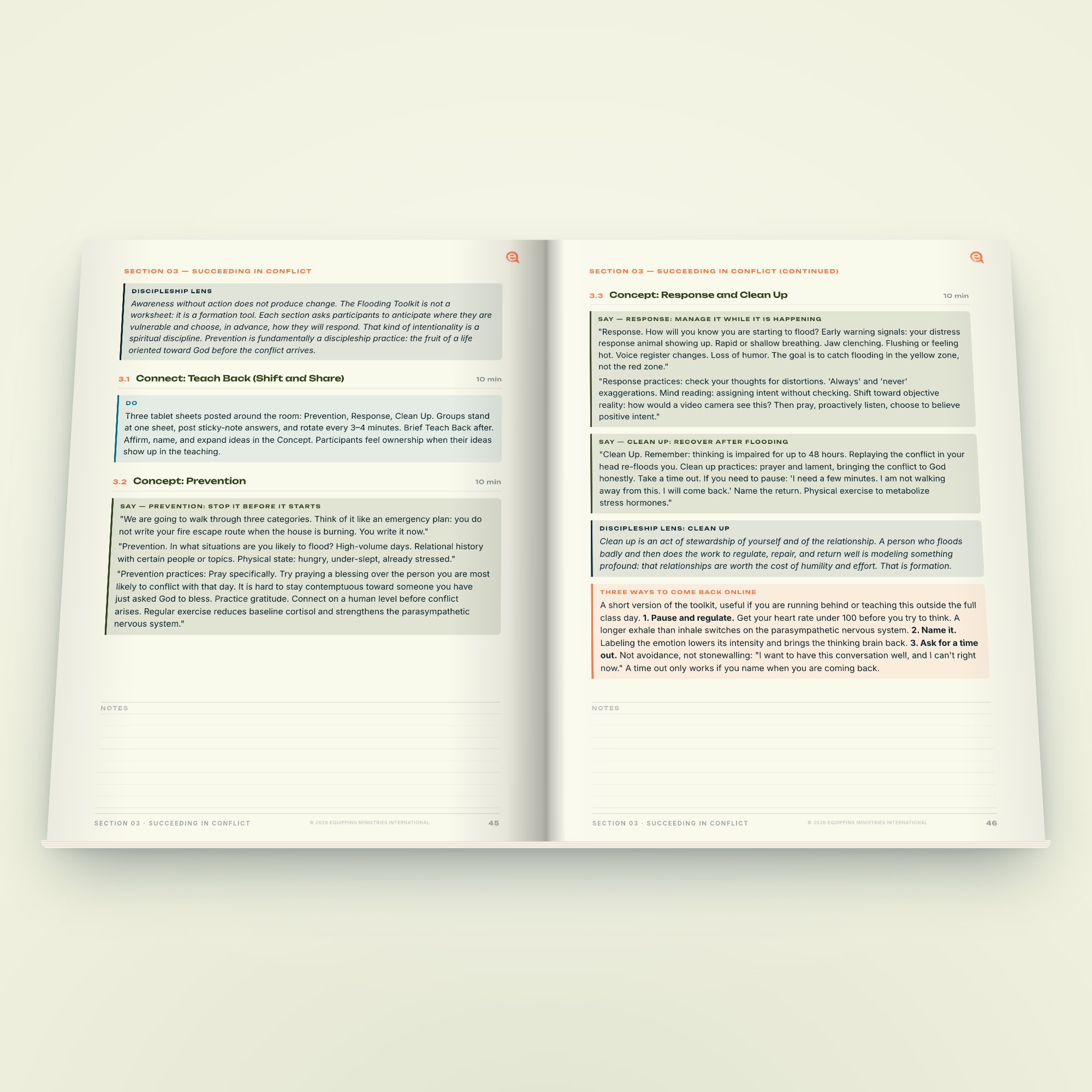
- The instructor guide with section-level instructor notes, plus a section on biblical conflict patterns. Nothing left for you to figure out on your own.
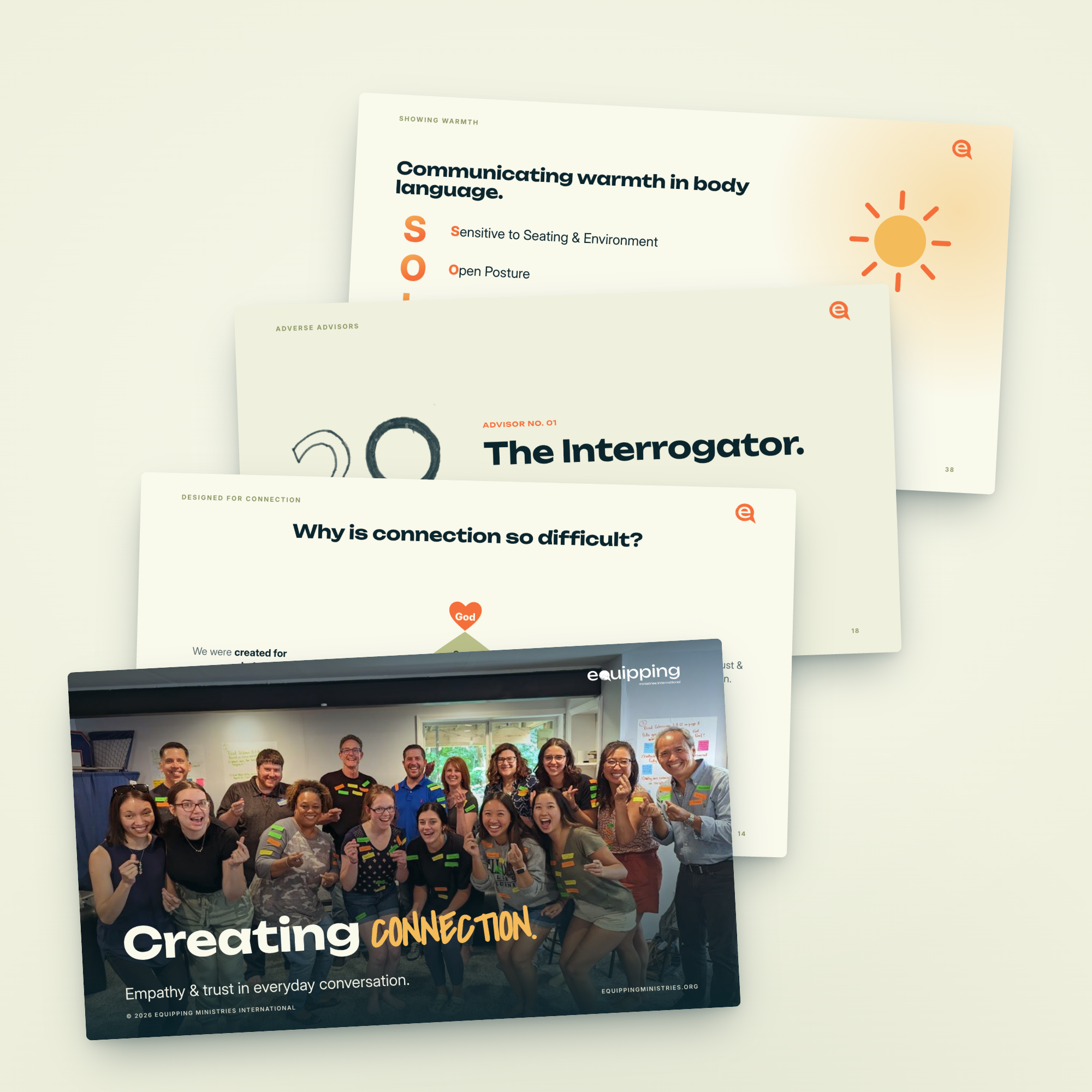
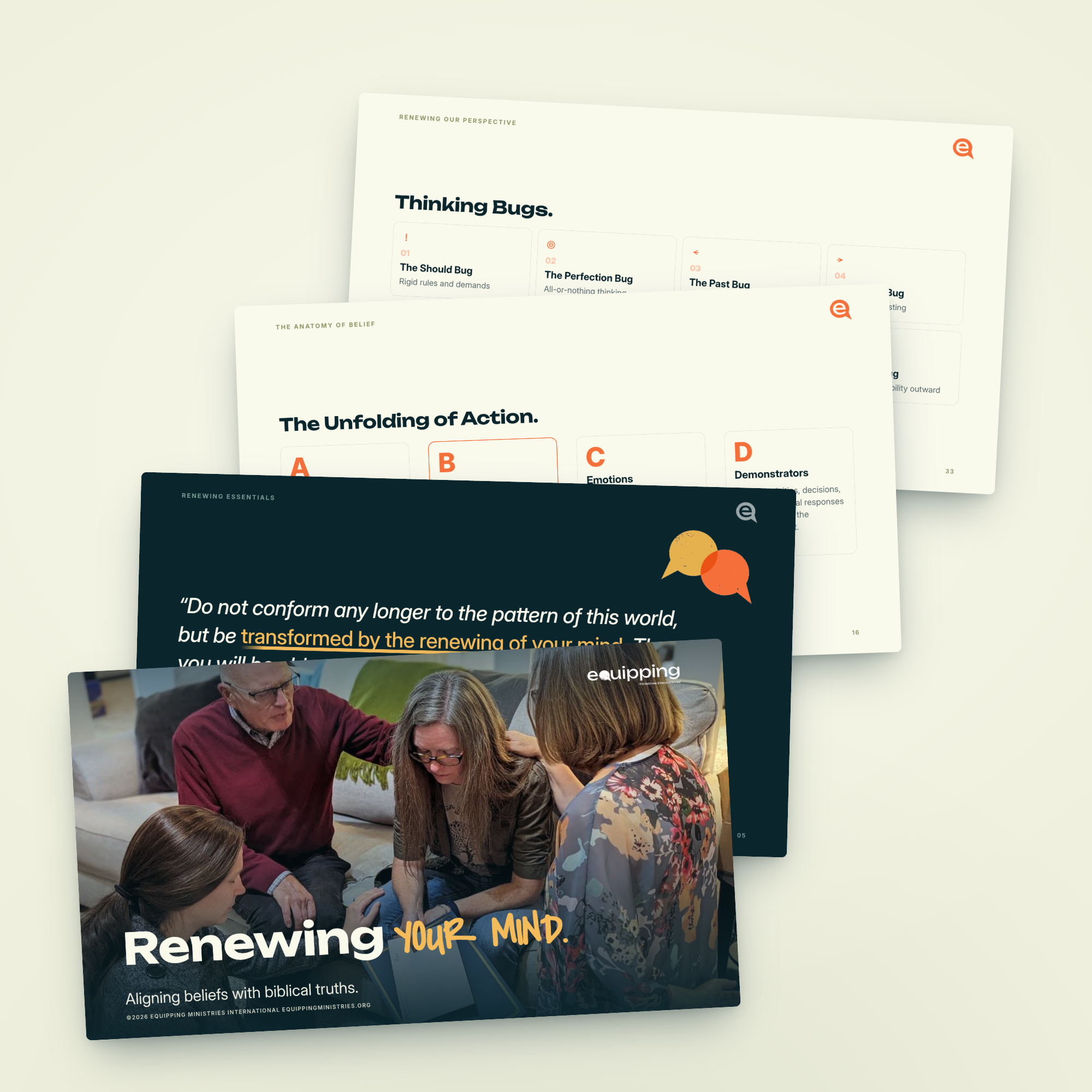
- The slide deck
- Facilitator sheets for the small group leaders in your room
- Participant guides, one per person
- Flooding Canvas
- Elements of a Confrontation
- Quick Reference Guide
- Permission to teach, yours once you own the kit
Can I actually teach this?
Yes. You don't need a counseling background, a seminary degree, or prior teaching experience. Your job isn't to fix anyone, and nothing in the course asks you to.
Flooding awareness comes first, before anyone practices confrontation, so people have a way to stay grounded before they're asked to go anywhere hard.
Want a closer look first? Join us for Leading an Equipping Course, a free session that walks you through what running this looks like before you buy. For a deeper dive once you're ready, keep an eye out for How to Lead an Equipping Course on our events page.
"But what about..."
That's what Resolution is for. It's a decision that doesn't depend on the other person cooperating. Grief, lament, and trust are postures someone can hold no matter what the other person does.
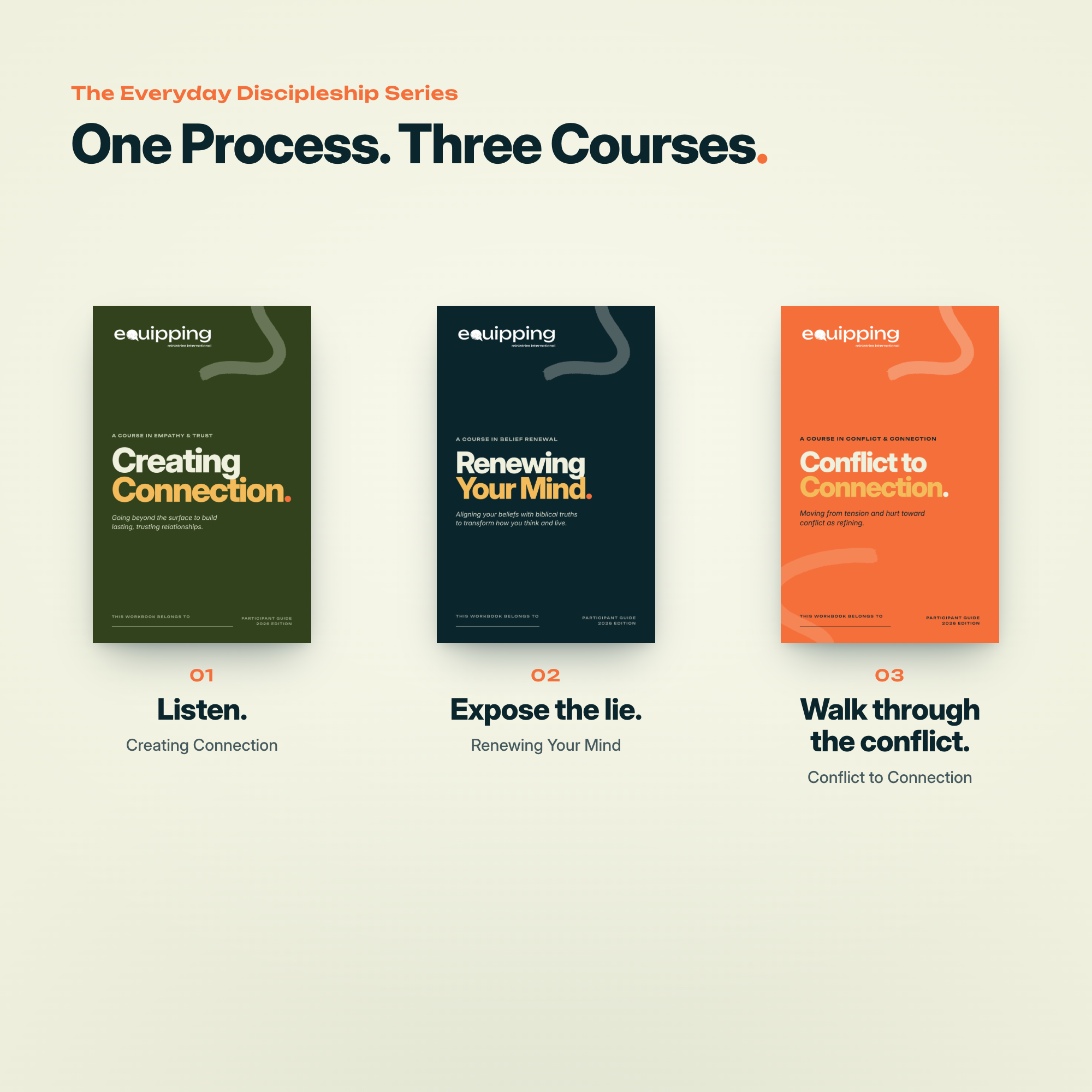
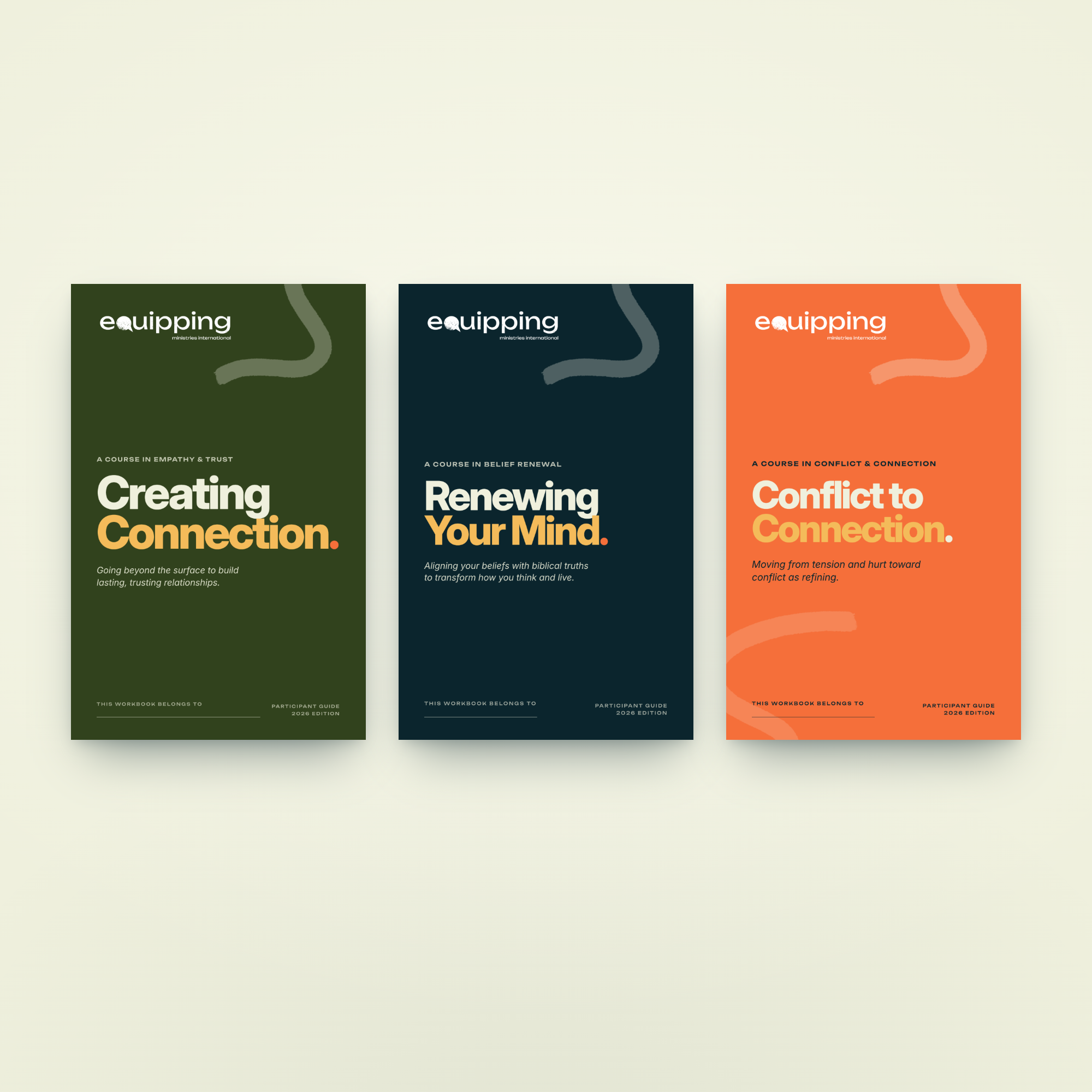
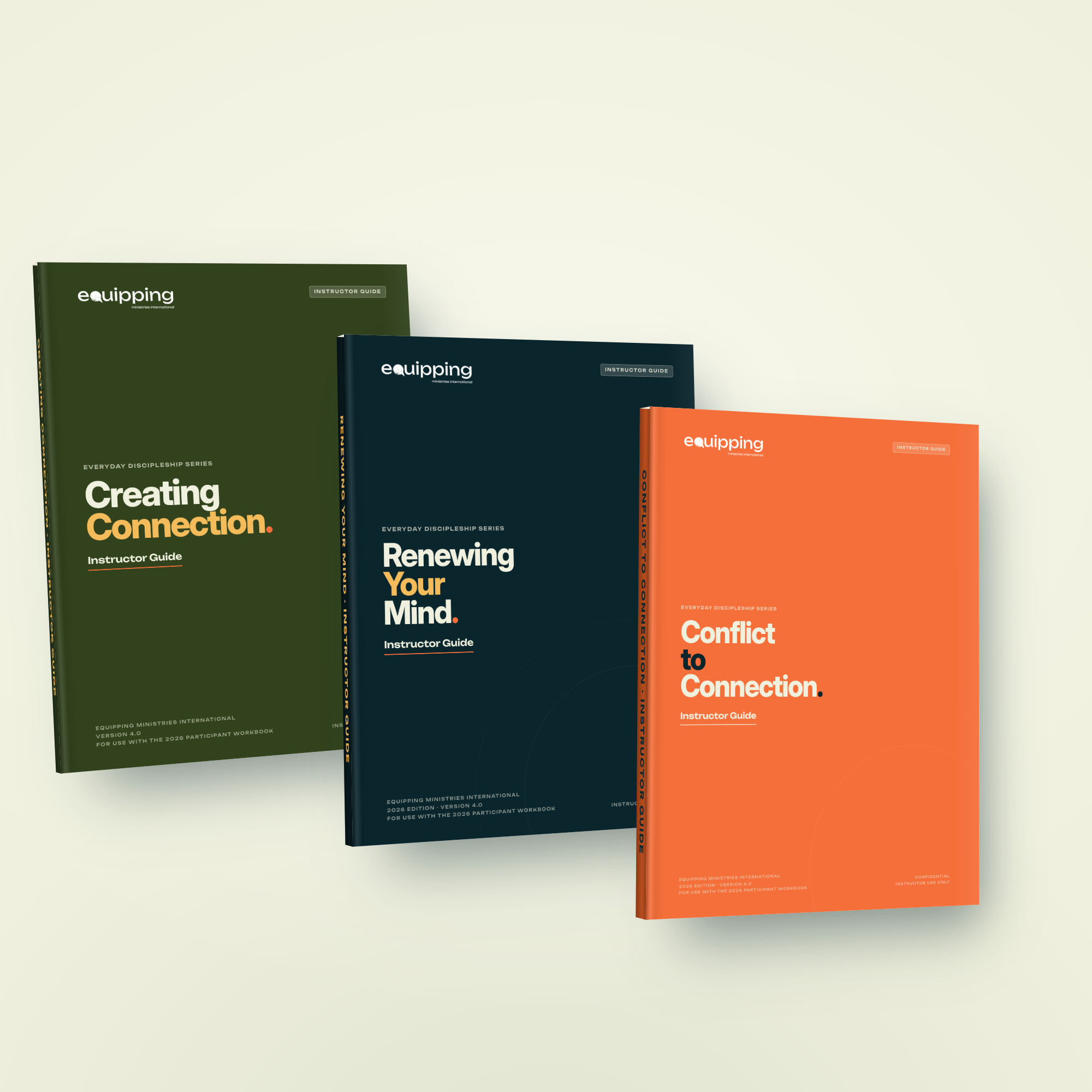
No. People who haven't taken them will still find everything they need. That said, Creating Connection builds the relational safety that makes honest conflict possible, and Renewing Your Mind helps you see what are your own personal challenges to deal with before bringing them into a conflict, which is why most groups start with the other two courses.

Pricing
All three courses, each with permission to teach it.
Want to start with just this course? A single-course kit runs $299 for 12, $399 for 25, or $299 digital.
More than 25 in your group? Email us and we'll put together a custom kit and quote.